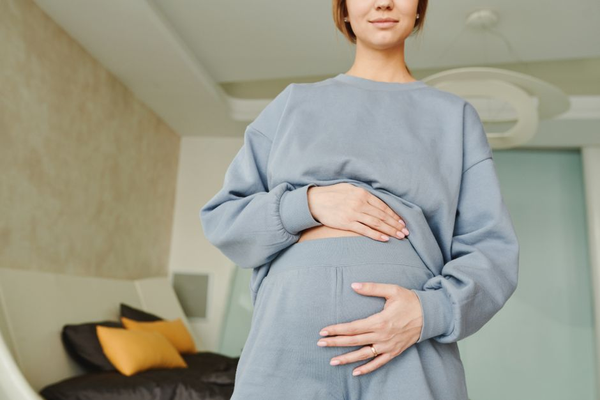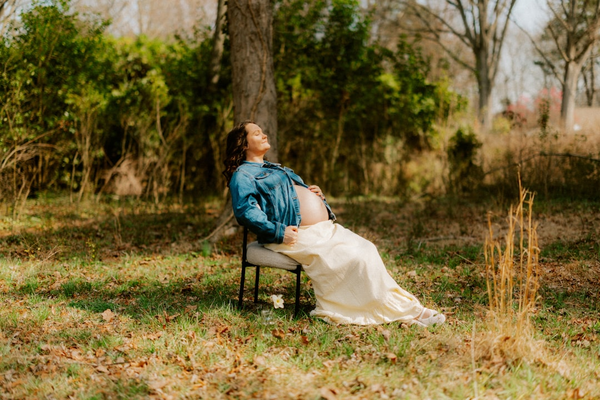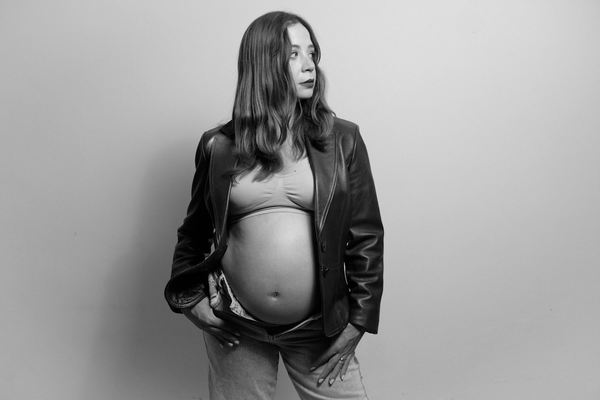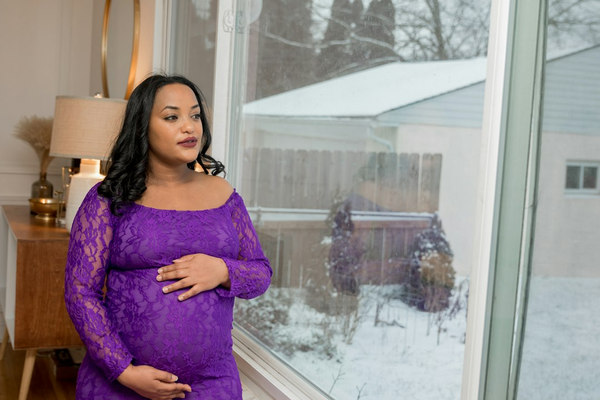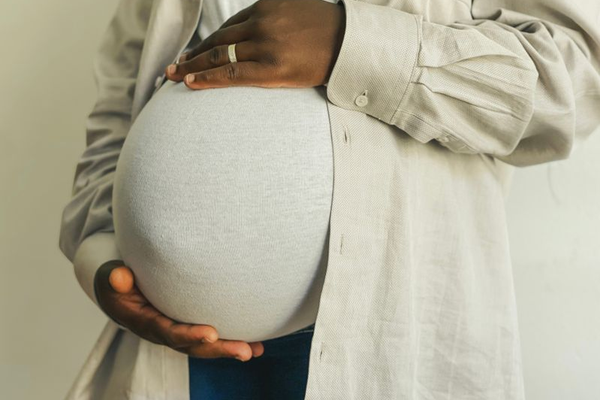
Short answer: no, and not by a long shot. Sessions at 36, 37, 38, even 39 weeks happen all the time — one photographer has a client on record who delivered just 10 hours after her 38-week session (Panos Productions). What changes this late isn't whether you can do a session — it's how much walking, standing, and outfit-changing you'll actually want to sign up for. Below: what shifts after 36 weeks, how to book something at the last minute if you're still up for it, and what your options actually are if the honest answer is that you've already missed the window entirely.
Key takeaways
- There's no medical or practical deadline for maternity photos — photographers routinely shoot 37, 38, and even 39-week sessions
- 28–36 weeks is the commonly recommended window because it balances a visible bump with comfort and mobility, not because later is unsafe (ShootProof)
- After 36 weeks, plan around your energy, not the calendar — shorter sessions, fewer wardrobe changes, and locations with minimal walking all help
- If the baby has already arrived, a traditional "maternity" session obviously isn't an option anymore — but you're not entirely out of options if you still want that portrait
Why 28–36 weeks became the "recommended" window in the first place
Most photography studios quote 28 to 36 weeks as the sweet spot, and a few narrow it further to 32–36 weeks for first-time moms, since a first pregnancy often shows a little later than a second or third (ShootProof). The logic isn't medical — it's practical. Your bump is fully rounded and photogenic by then, but most people still have the energy to hold a pose for twenty minutes, change outfits twice, and walk to a second location if the shoot calls for it.
That window narrows for other situations: twin pregnancies are usually photographed earlier, around 24–28 weeks, since carrying multiples tends to bring an earlier due date and a faster-growing bump. And if you need the photos back in time for a birth announcement or printed invitation, most photographers suggest booking no later than 27–28 weeks simply to leave enough turnaround time before the baby arrives (ShootProof).
What actually changes after 36 weeks
Nothing about week 37 or 38 makes a photo impossible — what changes is your stamina. Swelling, fatigue, and general discomfort with standing tend to increase after 34 weeks, and a session that would have felt easy at 30 weeks can feel like a lot at 38 (Panos Productions). None of this is a hard medical restriction on being photographed — it's simply that walking between locations, standing for long stretches, and getting in and out of multiple outfits get harder as your due date gets closer. If you have any specific concerns about activity or mobility this late in pregnancy, your own care provider is the right person to ask, not a photography blog.
The practical fix photographers actually use: shorter sessions (30–45 minutes instead of 90), one location instead of two or three, one outfit instead of a full wardrobe change, and more sitting or reclining poses instead of standing ones. As one photographer put it, mom's comfort "matters more than whether the calendar says 34, 35, or 37 weeks" — the session gets simpler, not impossible. Another photographer who regularly books 37–38 week sessions sums up the honest trade-off: at that stage, "you might be physically uncomfortable enough that posing for an hour sounds miserable rather than fun," which is exactly why the fix is a shorter session in a location with minimal walking, not skipping it altogether (Elisabeth McKnight Photography).
If it helps to hear it plainly: a late session is always better than no session, according to more than one photographer who specializes in exactly this timing.
Posing and wardrobe tips that actually work at 38–39 weeks
You don't need special maternity wardrobe to photograph well this late — solid colors or very small prints keep the eye on the bump rather than a busy pattern, which matters more the larger your belly gets (Elisabeth McKnight Photography). Beyond that, a handful of pose adjustments make a standing-heavy session feel a lot less exhausting:
- Sit or recline instead of standing. A window seat, the edge of a bed, or a comfortable chair all photograph beautifully and take the weight off your feet entirely.
- Let a partner or wall take some of your weight. Leaning back against a partner's chest, or against a doorframe, still looks intentional and relaxed in photos — it doesn't read as "tired" the way it might feel.
- Side profile over straight-on. A gentle side angle flatters a full-term bump and requires almost no active posing — just a slight turn of the shoulders.
- Skip the outfit change, keep a robe or wrap on hand. One flattering outfit plus an open robe or cardigan gives you two visually different looks without a wardrobe change mid-session.
- Let your partner or an older sibling do some of the "work." A shot of your partner's hands framing your belly, or a toddler leaning in to listen, gives you variety in the gallery without you having to move between poses yourself.
If you're still pregnant and want to book something now
If you're 36, 37, or even 39 weeks and reading this because you're wondering whether it's too late to even ask — it isn't. The worst outcome of asking is a photographer telling you their schedule is full, which costs you nothing; the worst outcome of not asking is assuming you've missed it when you actually haven't. Call or message photographers directly and say exactly where you are: how many weeks, how much time and mobility you realistically have, and how soon you need the images. A few things make a last-minute maternity photoshoot go smoothly:
- Ask about a shorter session format. Many photographers will happily do a 20–30 minute "mini session" for a late-pregnancy client even if it's not their standard offering — you just have to ask.
- Pick one low-effort location. Your own living room by a window, your front porch, or a nearby spot you can reach without much walking beats a park you'd need to trek across.
- Plan for one outfit, not three. Fewer changes means less standing and less time on your feet overall.
- Build in breaks. A good last-minute photographer will pace the session around you, not the other way around.
- Have a backup plan for timing. If you go into labor before the scheduled date, ask upfront whether the photographer offers rescheduling or a refund — most do, given how common this is at 38+ weeks.
If you can't find anyone available, or standing for even a short session genuinely isn't realistic right now, the DIY route — a phone on a tripod, a window with good light, and a self-timer — works at 38 weeks exactly the same way it works at 30. You're not choosing between "professional or nothing."
What if you book something and go into labor first? It happens often enough that most photographers who take late-pregnancy bookings have a standard policy for it — ask about this before you pay a deposit. Common arrangements include a free reschedule to a newborn or "fresh 48" session instead, a partial refund, or simply no penalty for cancelling with short notice. A photographer who's used to shooting 37+ week sessions won't be surprised by this question; if one seems put off by it, that's worth noting before you book.
What "too late" actually looks like when the baby's already here
Some searches that bring people here aren't really about whether 38 weeks is too late — they're from someone who's already given birth and is realizing, a little too late, that they never got a single maternity photo. Between hospital bags, work handoffs, and just being exhausted in the third trimester, it's a genuinely common thing to run out of time for. If that's you: a traditional maternity session, by definition, isn't something you can go back and book. But that's a different problem than "is 38 weeks too late," and it has a different kind of answer.
If you have even one photo from while you were pregnant — a low-quality mirror selfie in sweatpants counts — that photo has something a session booked today never could: what you actually looked like, right at that point in your pregnancy. That's honestly the whole case for a tool like AI Maternity Photoshoot Lab in this specific situation. The process is simple: you upload one clear, front-facing portrait — good lighting, full face visible, no filters or sunglasses covering your features — and the system restyles it into a polished, maternity-style portrait using your real face and features. Photos that don't meet the basic requirements (too dark, face not visible, that sort of thing) get auto-blocked before any credits are used, so a failed attempt doesn't cost you anything. New accounts get 30 complimentary credits to try it before paying for more.
Worth knowing, honestly:
- If your only available photo isn't clearly pregnant — say, you never took one at all — the tool can still simulate a bump onto a recent portrait, but that result is closer to an artistic keepsake in the spirit of a maternity photo than a literal record of that specific pregnancy. We'd rather say that plainly than let you assume otherwise.
- Results depend on the source photo: a sharp, well-lit, forward-facing shot produces a noticeably cleaner result than a dim or blurry one.
- It works from a single portrait of one person — it won't merge a separate photo of your partner into the same generated image.
- It can't recreate the actual experience of being pregnant and photographed — only the final image.
The other backup plan: a "fresh 48" session
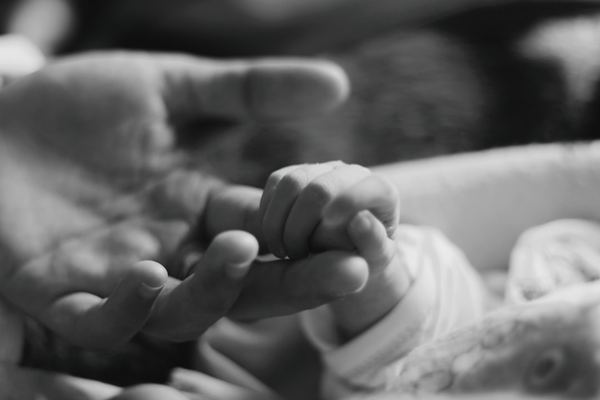
If labor arrives before your maternity session does, ask any newborn photographer about a "fresh 48." It's an industry-standard term for a session held within the first 48 hours after birth — at the hospital, birthing center, or home — usually lasting around 30 minutes and focused on documentary-style moments like tiny newborn features, first feedings, and hospital wristbands, rather than posed portraits (Xilo Photography). It's not a substitute for a maternity photo — it captures a completely different moment — but it's worth knowing this exists as its own thing, separate from either a maternity session or a standard newborn session scheduled weeks later. Pairing a fresh 48 session with an AI-recreated maternity portrait from a photo you already have gives you both ends of the timeline covered, even if the middle got skipped.
Comparing your options by how many weeks you have left
| Situation | What to do | Cost |
|---|---|---|
| 28–36 weeks, plenty of energy | Book a standard session | $250–$1,500+ |
| 37–39 weeks, still comfortable | Ask for a shorter "mini" session, one location, one outfit | Often less than a full session |
| 37–39 weeks, low energy or mobility | DIY self-portrait at home, or a very short in-home session | $0–$50 |
| Already gave birth, have a pregnancy photo | AI-generated maternity-style portrait from that photo | Free tier, then a few dollars |
| Already gave birth, no pregnancy photo at all | AI-simulated bump on a recent portrait (keepsake, not a literal record) | Free tier, then a few dollars |
Notice what actually decides your row in that table: not the week number, but two honest questions — do you still have the energy for a session today, and do you have any photo at all from somewhere in the pregnancy? Answer those two and you'll land on the right option a lot faster than sitting there wondering whether 36, 37, or 38 counts as "too late." None of them do.
Frequently asked questions
Q. Is 38 weeks too late for maternity photos? A. No. Sessions at 38 weeks are common, and photographers routinely accommodate them — you'll typically just want a shorter session with fewer outfit changes and less walking than you would have needed at 30 weeks.
Q. Is 36 weeks too late for maternity pictures? A. Not at all — 36 weeks actually sits right at the edge of the commonly recommended 28–36 week window, so it's still considered prime timing by most photographers, not a stretch.
Q. Can you take maternity photos at 39 weeks? A. Yes. It's less common only because fewer people schedule that late, not because it's not possible. Look for a photographer willing to do a short, low-mobility session, or consider a DIY self-portrait at home if standing for a scheduled session isn't realistic right now.
Q. I forgot to take maternity pictures and the baby is already here — what are my options? A. A traditional maternity session isn't something you can retroactively book, but if you have any photo from while you were pregnant, an AI maternity photo generator can turn it into a styled portrait after the fact. If you don't have a pregnancy photo at all, the same kind of tool can simulate a bump onto a recent photo, though that result is more of an artistic keepsake than a literal record of that pregnancy.
Q. What's the actual latest week someone has done a maternity shoot? A. There's no fixed record — some photographers have shot sessions within hours of delivery. The real limit isn't the calendar; it's how much a specific mom is comfortable doing that day.
Q. Are maternity photos at 37 weeks still going to look good? A. Yes. Your bump is fully developed and photogenic at 37 weeks — the only real difference from an "ideal window" session is that you'll likely want a shorter shoot, one outfit instead of several, and more seated or reclining poses to stay comfortable throughout.
Q. Does it matter if I don't remember exactly how many weeks pregnant I was in an old photo? A. Not for the purposes of getting a keepsake portrait made from it. An exact week count matters for scheduling a live session with a photographer, but if you're working from a photo you already have, what matters is simply that the photo shows a visible bump and your face clearly — the precise week isn't something you need to track down.