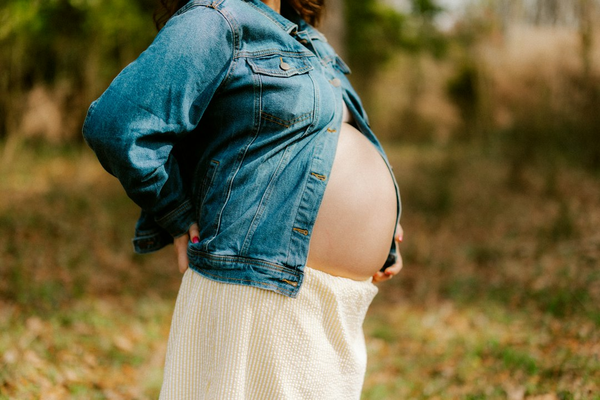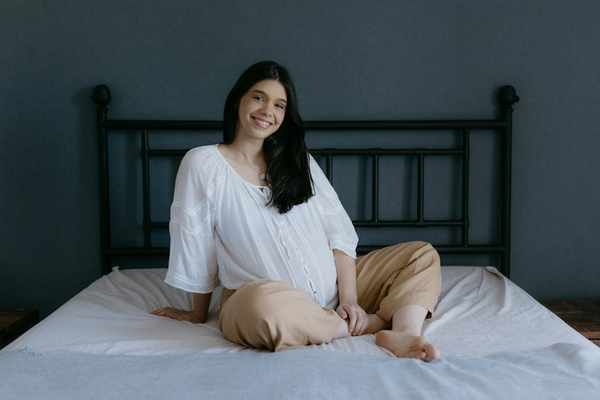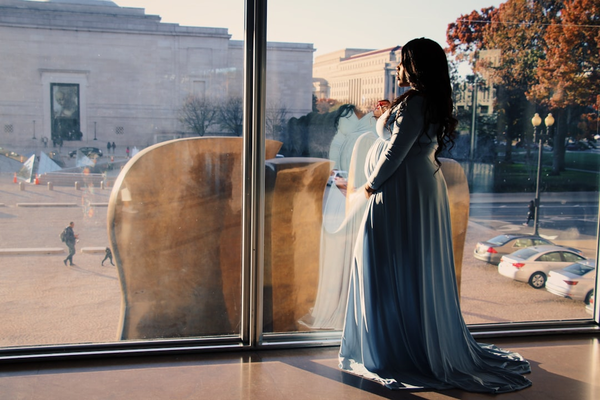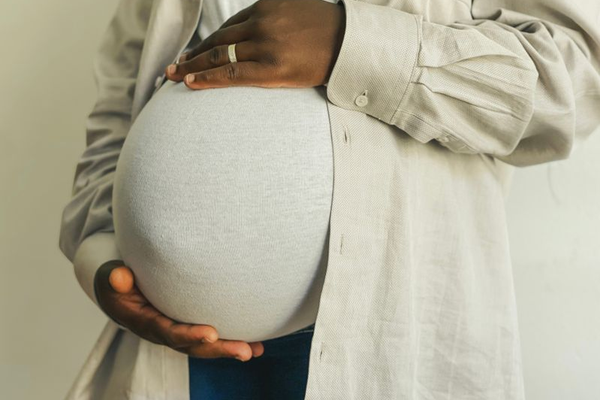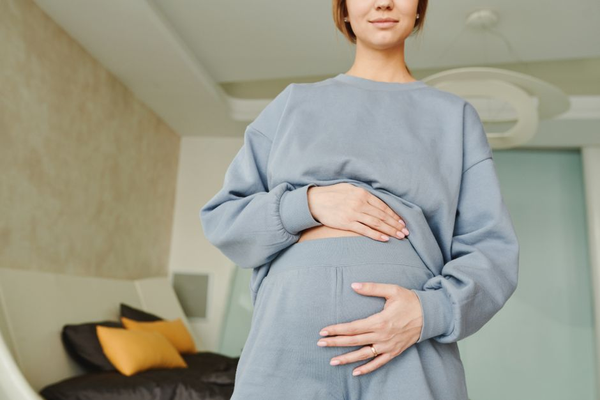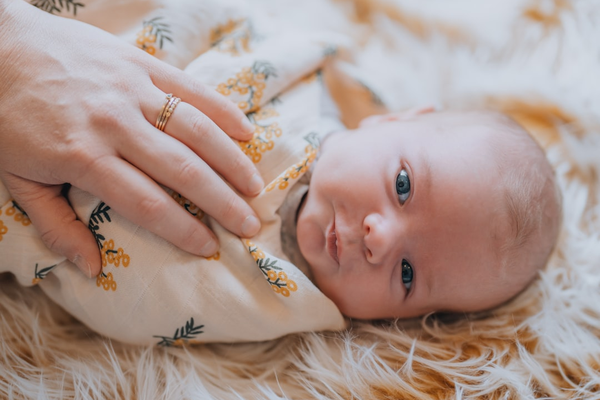
If your baby arrived before your maternity session did, you're not the only one this happens to — about 1 in 10 babies in the US are born preterm, before 37 weeks (CDC), and that's before counting everyone whose "on-time" baby simply came earlier than their booked shoot date. A cancelled or missed maternity session because labor started first is common enough that most photographers have a policy for it. The good news: you can still get maternity-style photos after the baby is born. Not by turning back time, but by using a photo you already have — even a casual one — as the starting point.
Key takeaways
- You can't schedule a new maternity session retroactively, but you can still get maternity-style photos from an existing pregnancy photo
- Any candid photo from during your pregnancy works as a starting point — a phone selfie, a partner's quick snapshot, even a blurry one, is enough
- Honestly, this is the one situation where an AI tool has an edge no human photographer can match — nobody can shoot a session in a week that's already gone by
- If you have zero photos from the pregnancy at all, there's still an option — just a different, more honest conversation about what it can and can't recreate
Why this happens more than people realize
Preterm birth (before 37 weeks) affects roughly 10.4% of US births (CDC) — about one in ten pregnancies ends before the "ideal" 28–36 week maternity photo window even opens. Add in the far larger group of people whose babies arrived a week or two early without any medical complication at all, plus the ones who simply ran out of time between work, moving, or just exhaustion, and "I never got maternity photos" turns out to be a very common sentence, not a rare failure on anyone's part.
Photographers know this too. Many maternity photography contracts explicitly address what happens if labor starts before the session — some offer a switch to a "fresh 48" or newborn session instead, others a partial refund, and most treat early labor as the unavoidable, forgivable thing it is rather than a missed appointment. Still, none of that gets you the maternity photo itself. The session that didn't happen, didn't happen.
A typical version of this looks something like: a session gets booked for 35 weeks, which felt comfortably far off at the time. Then water breaks at 33 weeks, or a doctor calls for an early induction, or contractions simply start on their own weeks ahead of schedule, and the appointment that was circled on the calendar quietly turns into a cancellation email instead. Nobody did anything wrong in that sequence — it's just how some pregnancies go, and it happens often enough that "cancelled maternity shoot, early labor" is a genuinely common search, not an unusual one.
What "maternity photos after baby is born" actually means
Here's the thing worth being precise about: you cannot photograph a pregnancy that's already over. No photographer, no amount of editing, and no AI tool recreates a live moment that already passed. What's actually possible is different, and it splits into two real situations.
If you have any photo from while you were pregnant — even one, even a bad one — that photo is real evidence of what you looked like at that point in your pregnancy. A bump selfie in the bathroom mirror, a photo your partner grabbed on their phone at a birthday dinner, a blurry one from a work trip. It doesn't need to be well-lit or flattering. This is where an AI maternity photo generator does something no human photographer can: it takes that one imperfect photo and restyles it into a polished, maternity-portrait-style image — using your actual face and your actual pregnant body from that photo, not a stand-in or a guess.
If you genuinely have zero photos from anywhere during the pregnancy, the honest answer changes. A tool like AI Maternity Photoshoot Lab can still simulate a bump onto a recent portrait of you, but at that point you're commissioning an artistic keepsake in the spirit of a maternity photo, not recovering a real moment. We think that distinction matters enough to say it plainly rather than let the marketing blur it.
The one case a human photographer genuinely can't fill
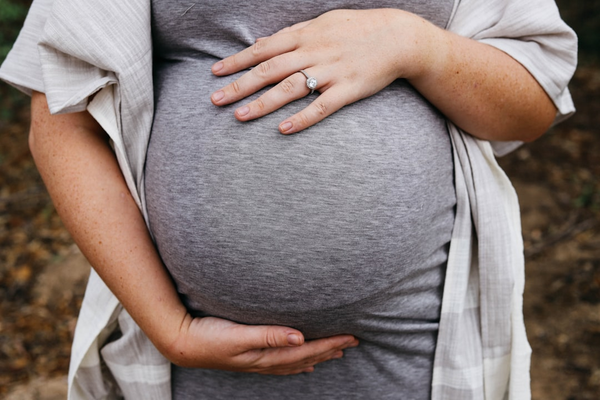
Every other situation in this "missed the window" category has a human alternative — DIY self-portraits, a friend with a camera, a photography student doing a trade session, even a last-minute photographer willing to squeeze in a quick shoot before you go into labor. Once the baby is born, every one of those options is gone. There's no calendar date you can move to. A photographer with the best gear and twenty years of experience has exactly the same access to your third trimester that you do now: none.
That gap is exactly what an AI generator is good for here — not because it beats a real photoshoot, but because it's the only thing working backward from a photo instead of forward from a booking calendar. A photographer's whole value depends on being physically present at the right moment; once that moment's gone, no amount of skill or flexible scheduling on their end brings the pregnancy back. An AI tool skips that requirement entirely — it just needs a photo that was actually there when it mattered. Upload one clear, front-facing photo from your pregnancy — good lighting and your face visible are the main requirements — and the system generates a styled portrait from it. If the photo doesn't meet the basic requirements, it gets auto-blocked before any credits are spent, so a bad attempt doesn't cost you anything. New accounts start with 30 complimentary credits to try it.
The honest limitations, stated plainly:
- It works from a single portrait of one person, so it can't merge a separate photo of your partner into the same generated image as if you'd been photographed together
- Result quality tracks your source photo — a sharp, well-lit shot produces a cleaner result than a dark or blurry one, though even an imperfect photo is usually usable
- If you're using it without any real pregnancy photo at all, understand you're getting a stylized keepsake, not a documentary record of that specific pregnancy
- It can't give you back the experience of being pregnant and photographed in the moment — only the image itself
Where to actually look for a usable pregnancy photo
Before assuming you have nothing, it's worth a real search rather than a quick glance at your camera roll's most recent photos. People take more bump photos than they remember taking, and they end up scattered across places you wouldn't think to check first:
- Your phone's auto-generated albums. Search "belly," "bump," or just filter your photo app by the date range of your third trimester — most phones will surface things you forgot existed.
- Text message and group chat threads. Photos sent to family or a friend group often never get saved to your camera roll at all, especially if you sent them from someone else's phone.
- Social media, even unposted drafts. Check saved drafts or photos you uploaded but never published, on any platform.
- Other people's phones. A partner, sibling, or friend who was around during your pregnancy may have snapped something at a dinner, a shower, or just in passing that you never saw.
- Video calls and video files. A screenshot from a video call, or a single frame pulled from a video clip, can work as a source photo if it's clear enough.
How this compares to hiring a photo editor to "add" a bump
Before AI tools like this existed, the only way to simulate a pregnancy photo after the fact was to hire a freelance photo editor to manually composite a bump onto an existing picture in Photoshop — a skilled specialist job that typically costs anywhere from $50 to a few hundred dollars per image and can take days to turn around, depending on how booked the editor is. An AI maternity photo generator does a version of the same underlying task — modifying an existing photo to include a pregnancy bump — but in minutes rather than days, and starting from free trial credits rather than a per-image freelance quote. The trade-off is control: a skilled human editor can take specific direction on exactly how a composite should look, while an AI tool works from its own model of what a natural-looking bump should look like on your body type and pose. For most people just wanting a genuine keepsake rather than a specific, art-directed composite, the AI route gets there faster and for less.
Your next steps, in order
- Look through your camera roll, your partner's phone, and any group chats or social posts from your pregnancy. People take more casual bump photos than they remember — check texts to family, maternity-clothes-shopping mirror pics, even video calls you might have screenshotted.
- Pick the clearest one you can find. Front-facing, decent lighting, your face visible — it doesn't need to be a "good" photo by any normal standard, just a usable one.
- If you have several, try more than one. Since a failed attempt on a non-compliant photo doesn't cost credits, there's no downside to testing a couple of candidates before settling on your favorite result.
- If you have zero pregnancy photos, decide up front whether a stylized keepsake (rather than a literal record) is what you actually want, and go in with that expectation rather than a surprised one.
- If your baby was born prematurely and is still in early care, there's no rush here — this works exactly the same whether you do it this week or in six months, whenever you have the time and headspace for it.
- Don't discard a photo just because it feels unflattering. A photo taken in sweatpants, mid-yawn, or with messy hair is still a completely usable source — the tool is restyling the portrait, not judging the original.
- If multiple people in your life were around during your pregnancy, it's worth a group text asking "does anyone have a photo of me pregnant?" People are often glad to be asked, and someone usually comes through with something you didn't know existed.
Comparing your options after the fact
| Your situation | Realistic option | Cost | Turnaround |
|---|---|---|---|
| Have a clear pregnancy photo | AI-generated maternity-style portrait from it | Free tier, then a few dollars | Minutes |
| Have only a blurry or dim pregnancy photo | Same AI tool, tried on 2–3 candidate photos | Free tier, then a few dollars | Minutes |
| Have zero pregnancy photos | AI-simulated bump on a recent portrait (keepsake, not a record) | Free tier, then a few dollars | Minutes |
| Want a specific art-directed composite | Freelance photo editor | $50–$300+ per image | Days |
| Baby was born early and is still in early care | Nothing to do right now — this works the same whenever you're ready | — | Whenever you're ready |
If your baby arrived early and is currently in extra care, there's genuinely no urgency here. Whether you look for a pregnancy photo this week, this month, or six months from now, the process works exactly the same — this is one thing on your list that will still be there, unrushed, whenever you have the bandwidth for it. Getting the pregnancy photo sorted is not something that needs to compete with anything else on your plate right now; it's a task with no deadline attached to it, which is a rare thing in the first weeks with a new baby.
Frequently asked questions
Q. My baby came before my maternity shoot — is there any way to still get pregnancy photos? A. Yes, if you have even one photo from during your pregnancy — a casual phone photo counts. An AI maternity photo generator can turn that existing photo into a styled, maternity-portrait-style image, since it works from a photo rather than requiring a live session.
Q. My baby was born premature and we missed our maternity photos — is this common? A. Very. About 10.4% of US births happen before 37 weeks (CDC), which puts a real number of families in exactly this position every year, on top of everyone whose full-term baby simply arrived earlier than their booked session.
Q. Can I do maternity photos after giving birth? A. Not in the literal sense of photographing an ongoing pregnancy — that moment has passed. What you can do is generate a maternity-style portrait from a photo taken while you were still pregnant, which is a meaningfully different but still genuine option.
Q. Our maternity shoot got cancelled because of early labor — can we reschedule it somehow? A. Not as a live session, since pregnancy doesn't pause. Ask your photographer whether they offer a newborn or "fresh 48" session instead as part of their cancellation policy — many do — and separately, see if you have any pregnancy photo you could turn into a keepsake portrait to cover the gap.
Q. What if I don't have a single photo from when I was pregnant? A. You still have an option, just a more honest one: a tool can simulate a bump onto a recent photo of you to create a maternity-style keepsake. It's worth knowing upfront that this is a stylized recreation rather than a record of your actual pregnancy, since the source photo wasn't taken during it.
Q. Is it worth doing this if my baby is already several months old? A. Yes — there's no expiration on this. The source photo does the work of showing what you looked like during pregnancy, so whether you generate the portrait one week after birth or one year later makes no difference to the result.
You don't have to just shrug and accept the gap where your maternity photos should have been. It won't come with studio lighting or a photographer coaching your pose — but it's a real photo from a real moment in your pregnancy, made into something you'll actually want on your wall. Do it this week, do it next year, it still works.