Whether you're a single mom by choice, parenting solo by circumstance, or simply doing this particular photoshoot without a partner or a helper around, solo maternity photos can look every bit as beautiful and complete as ones with someone else in the frame. You don't need another person to make a maternity photo feel finished — you need good light, a plan, and a way to trigger the camera without anyone standing behind it. Below: real technique for shooting entirely by yourself, pose ideas that work without a second person, and an option for anyone who'd rather not explain their situation to a stranger with a camera at all.
Key takeaways
- Going solo is genuinely common, not a niche situation — roughly 21% of US children live with a single mother, and fertility clinics report rising numbers of single mothers by choice specifically (Pew Research via Wikipedia; Single Mothers by Choice)
- A tripod (or stack of books) and a self-timer or remote shutter are all the "help" you actually need — no assistant required
- Certain poses and camera settings are specifically easier to nail alone than others — a few technique choices make a real difference
- An AI-generated portrait from a photo you already have is a genuinely private option if you'd rather not do a live session at all, with anyone
Going solo is more common than the photography industry assumes
Most maternity photography marketing defaults to picturing a couple, but that's a narrower reality than the actual numbers. About 21% of children in the US live with a single mother, per 2018 Pew Research data (Wikipedia), and that's before counting people who have a partner but are simply doing this specific shoot alone. Single motherhood by choice specifically is also a real and growing category — one sperm bank reports that half of its clients are single women choosing parenthood on their own (Single Mothers by Choice). None of this is a niche situation that needs special justification — it's simply one of several common paths into parenthood, and it's worth a photoshoot approach built for it rather than adapted from a couples template.
Camera setup for shooting completely alone
The technical side of solo shooting is more manageable than it sounds:
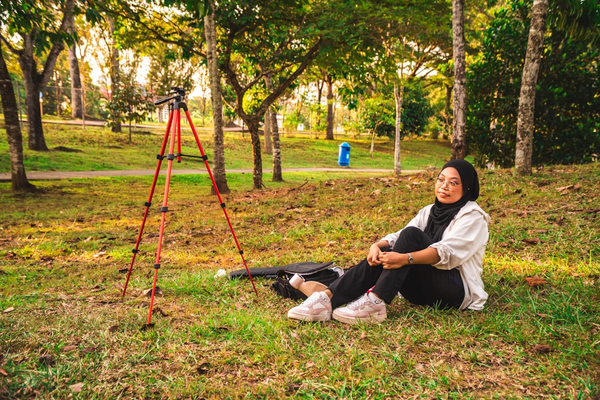
- Use a tripod with a remote shutter if you have one, or your phone's self-timer if you don't. A tripod or even a stack of stable books works to hold the camera steady; a Bluetooth remote (often under $15) lets you trigger the shot without racing back into frame after a countdown.
- Mark your spot on the floor. Before you start shooting, tape or chalk a mark where you need to stand so you land in focus every time, rather than guessing after each shot.
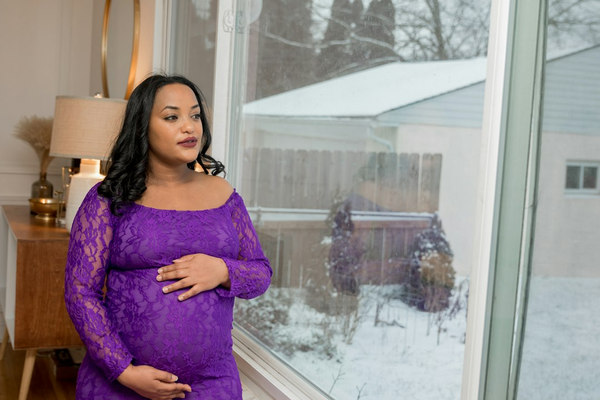
- Shoot near — not directly beside — a window. Positioning yourself slightly back from a window lets soft daylight wrap around your body rather than creating harsh contrast on one side.
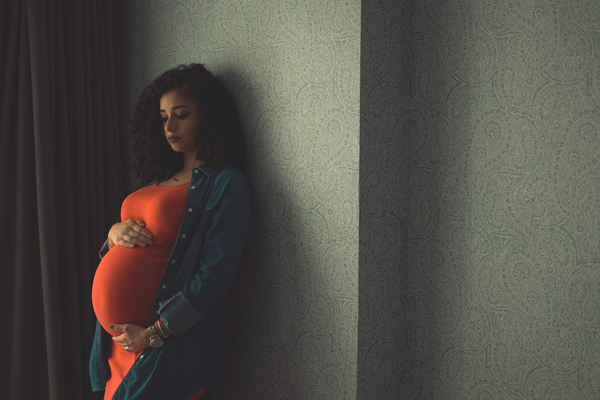
- Adjust your exposure compensation for the effect you want. Setting it to about -1 creates a moodier, more shadowed look; setting it to +2 when shooting toward a window is the standard approach for a silhouette (A-Fotografy).
- Make a shot list before you start. Deciding your poses and outfit changes in advance means you're not making creative decisions and operating the camera at the same time — a real source of frustration in solo sessions.
- Take far more frames than feels necessary. With nobody checking the shot on a screen and calling out adjustments, you'll only know what worked after reviewing everything — shoot generously and cull afterward.
- Use burst mode or a countdown app rather than a single-shot timer. Many phone cameras let you set a timer that fires off several frames in a row instead of just one, which matters when you can't see your own expression as you settle into a pose.
- Bring a small mirror or use your phone's front camera to preview. Even a quick glance in a compact mirror before triggering the shot helps you catch an awkward angle or stray hair that a photographer would normally point out for you.
Wardrobe choices that make solo shooting easier
What you wear affects how forgiving the whole process is, not just how the final photo looks. Solid colors and simple silhouettes photograph more predictably than busy patterns, which matters more when you can't have someone check how a pattern is reading from a distance. Clothing you can get in and out of without help — wrap dresses, button-fronts, elastic waistbands — removes a genuine logistical hurdle when there's no one around to zip you up or adjust a hard-to-reach clasp. And choosing an outfit you've already worn and feel comfortable in, rather than something new bought specifically for the shoot, means one less unknown to manage while you're also handling the camera.
Poses that actually work without a second person
Some poses translate to solo shooting more easily than others:
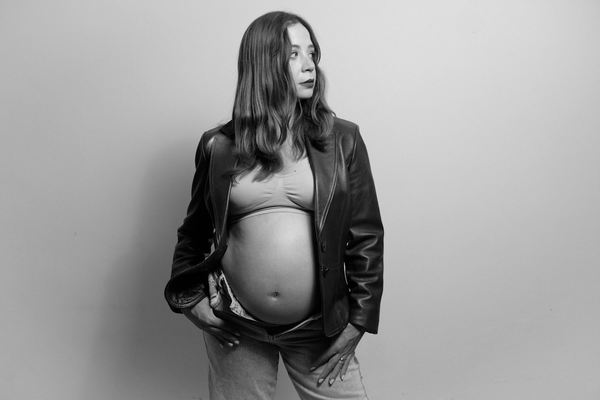
- Side-profile, hands cradling the belly. This is one of the most classic maternity poses precisely because it doesn't require any interaction with anyone else — just a turn of your shoulders and a natural hand placement.
- The mirror technique. Set your camera or phone on a tripod facing a full-length mirror, and you can see your own framing and adjust your pose in real time before triggering the shot, rather than guessing.
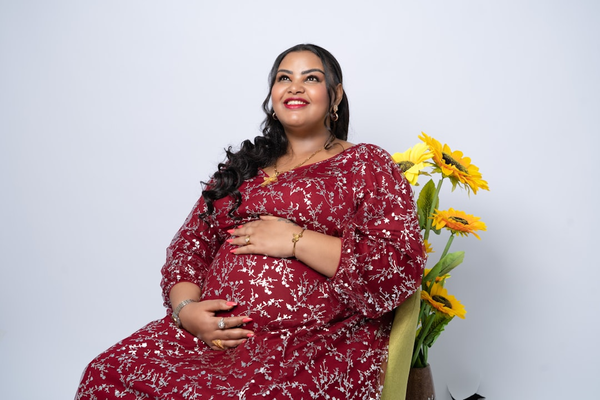
- Seated on stairs, a bed edge, or a low stool. Sitting poses are generally easier to hold steady and repeat consistently than standing ones, and they photograph well without anyone adjusting your posture for you.
- Movement shots using burst mode. A gentle twirl in a flowing dress, walking toward the camera, or adjusting your hair are all easier to time well using burst mode than trying to catch a single perfect static frame.
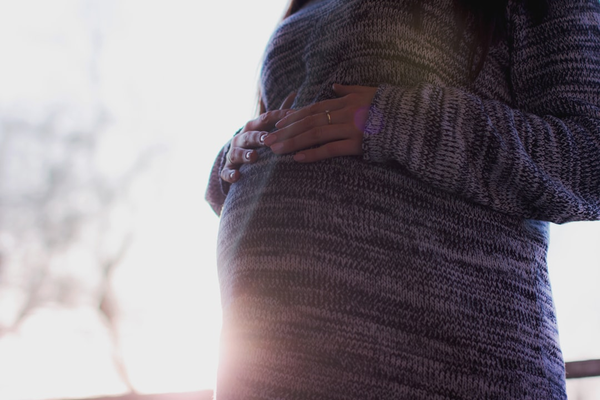
- Hands-only or belly-only framing. A close, cropped shot of just your hands against your belly, with your face out of frame entirely, sidesteps the challenge of nailing facial expression and hand position at the same time when you're also managing the camera.
Common mistakes in solo shoots, and the fix for each
A few things trip up most first-time solo sessions, each with a specific, easy fix:
- Focus lands on the background, not you. Fix this by tapping your marked spot on the phone screen to lock focus there before you back away, or by using a small object (a chair, a stack of books) at your exact standing distance to focus on first.
- The same pose looks stiff across every frame. Between shots, change something small — the angle of your chin, where your hands rest, which foot is forward — even if it feels repetitive to you in the moment. Small variations give you real options when you review afterward.
- You run out of energy before you run out of ideas. Shoot your most physically demanding poses (standing, twirling) first, and save seated or reclining poses for when you're more tired — the opposite order tends to show fatigue on camera.
- The lighting looks fine to your eye but flat in photos. Phone screens often make lighting look better than it actually reads in a final image — take a couple of test shots and check them at full size before committing to a location, rather than trusting how it looks live.
- You can't tell which shots actually worked until it's too late to redo them. Review your shots in batches of 10-15 as you go, rather than waiting until the very end, so you can adjust your setup while you're still dressed and in the mood, rather than discovering a problem afterward.
Solo doesn't mean incomplete
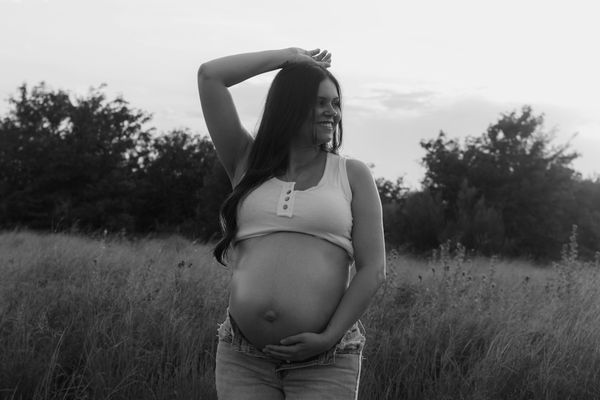
It's worth pushing back gently on the idea that a maternity photo needs a second person in frame to feel meaningful. A photo of just you and your belly is already the whole story of this particular chapter — you, growing a person, on your own terms. Plenty of the most striking maternity photography that exists is solo by design, not by compromise: a single figure, natural light, a hand resting on a bump, nothing else needed to make the image feel complete. If you find yourself wishing a partner or a photographer were in the picture with you, that's a valid feeling worth sitting with — but the absence of a second person doesn't make the photo itself any less finished or any less worth having. Years from now, what a photo like this actually shows is you: what you looked like, how you carried yourself, the specific version of you who did this on your own terms. That's not a lesser record of the moment — it's simply a different, and equally real, one.
If you don't want to explain your situation to a stranger
For a lot of people, the actual friction isn't the photography itself — it's the small talk with a studio photographer who assumes a partner is coming, or the slightly awkward moment of explaining your family situation to someone you just met. Something as simple as a photographer asking "will dad be joining us today?" during setup can turn what should be an enjoyable session into a moment you have to manage on someone else's behalf. You don't owe anyone that explanation, and plenty of photographers handle solo sessions without a second thought. But if you'd rather skip that interaction entirely, doing this privately removes the question from the equation completely.
A private option that doesn't require asking anyone for help
An AI maternity photo generator like AI Maternity Photoshoot Lab works from a single photo you already have — one you took yourself with a self-timer, or even a casual photo from any point in your pregnancy — and restyles it into a polished, maternity-style portrait. Nobody needs to hold the camera, nobody needs to be told about your situation, and there's no live session to schedule around anyone else's availability. New accounts get 30 complimentary credits, and photos that don't meet the basic requirements are auto-blocked before any credits are used, so there's no cost to simply trying it.
Worth knowing, honestly:
- It works from a single portrait of one person — this is actually well-suited to a solo photo, since there's no need to merge in anyone else
- Results depend on your source photo's lighting and clarity, so the same DIY setup tips above (window light, a steady tripod) still help even if you're generating rather than shooting the final version yourself
- Like any AI-generated image, small artifacts around hands or fabric are occasionally possible — worth trying more than one source photo if your first result isn't quite right
- It doesn't recreate the experience of a live session, but for a solo photo, "the experience" was never going to involve a second person anyway
Frequently asked questions
Q. What are some single mom maternity photoshoot ideas? A. Side-profile belly poses, seated poses on stairs or a bed edge, hands-only close-up framing, and the mirror technique (positioning a camera to face a mirror so you can check your pose) all work well without needing anyone else present.
Q. How do I take solo maternity photos without a photographer? A. Use a tripod or a stable stack of books with your phone's self-timer or a cheap Bluetooth remote, mark your spot on the floor in advance, shoot near natural window light, and take many more frames than you think you'll need.
Q. Can I do maternity photos by myself if I don't have a tripod? A. Yes — a stack of sturdy books or any flat, stable surface at the right height works as a substitute, and most phones have a built-in self-timer that doesn't require any extra equipment at all.
Q. What are good maternity photo options without a partner in the shot? A. Any of the solo poses above work well, and if you'd rather not do a live session at all, an AI-generated portrait from an existing photo is a private way to get a polished result without a partner, a photographer, or anyone else involved.
Q. Do I need to explain to a photographer that I'm doing this alone? A. No, though you certainly can if you're comfortable with it — most photographers handle solo sessions routinely. If you'd rather not have that conversation at all, shooting entirely on your own or generating a portrait from an existing photo both avoid it completely.
Q. Will a solo maternity photo look less special than one with a partner? A. Not inherently. A well-lit, well-composed solo portrait is a complete image on its own terms — it tells the story of you and your pregnancy, which doesn't require a second person to feel finished or meaningful.