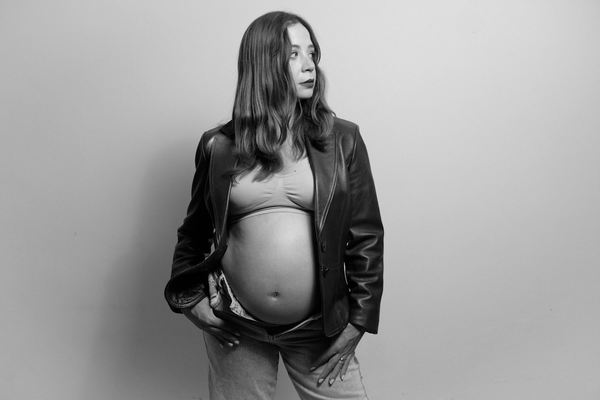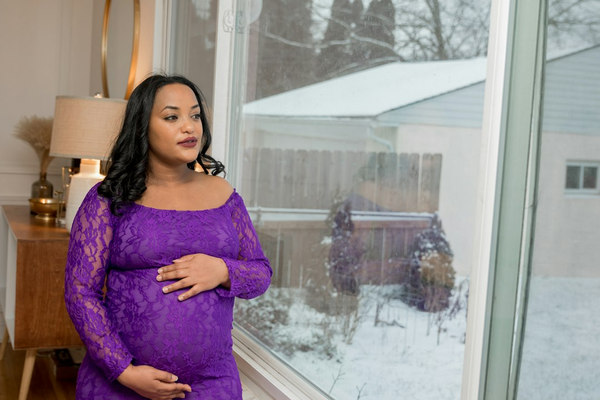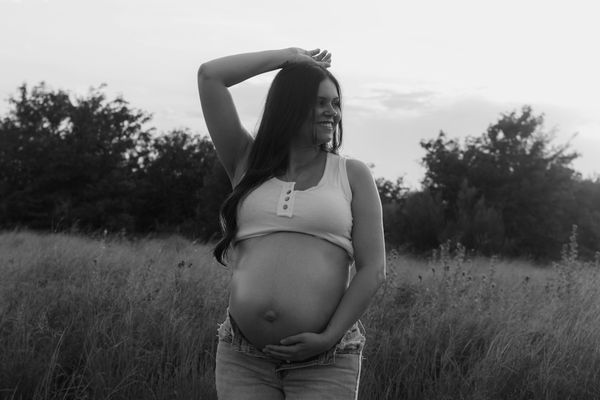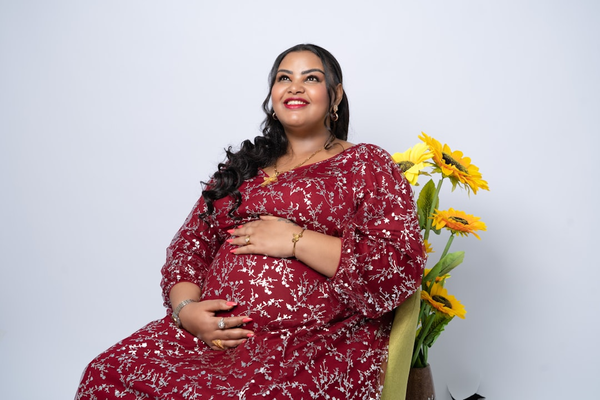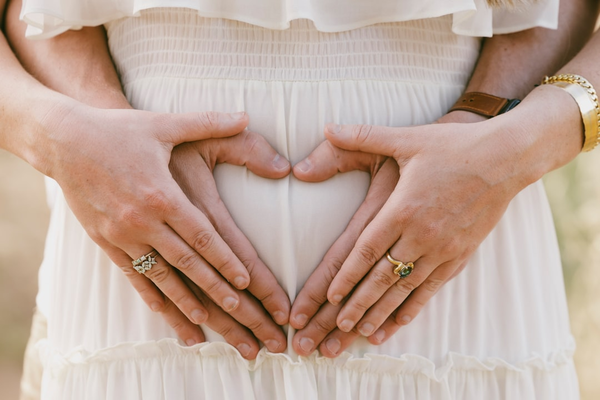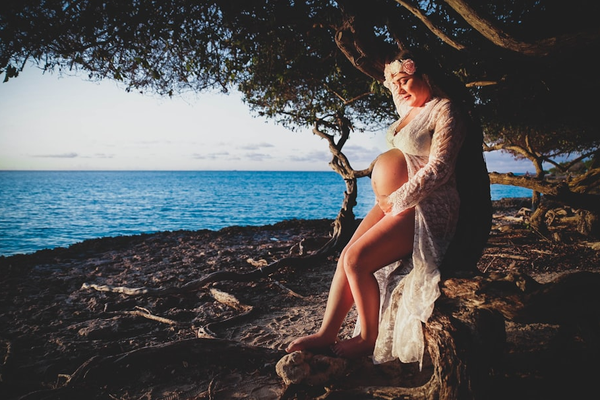
If the thought of standing through a maternity photoshoot right now sounds exhausting rather than exciting, that's not you being difficult — third-trimester fatigue is close to universal, and heat intolerance late in pregnancy is a well-documented physiological reality, not something to push through for the sake of a photo. Below: the real reasons you're feeling this way, and a genuine range of options ranked from full-effort to zero-effort, so you can pick something that actually matches how you feel today rather than how you wish you felt.
Key takeaways
- Third-trimester fatigue is close to universal — one study of 605 pregnant women found 94.2% experienced fatigue, with the third trimester scoring highest of all three trimesters (PMC)
- Feeling hotter late in pregnancy is real physiology, not just discomfort in your head — increased blood flow to the skin and metabolic changes both raise how warm your body runs
- Photo options exist across a real spectrum of physical effort, not just "full session" or "nothing"
- An AI-generated portrait needs only a photo you already have — no standing, no heat exposure, no live session required at all
Why you're this tired and this hot isn't in your head
Fatigue in pregnancy is remarkably common — a study of 605 pregnant women found that 94.2% experienced fatigue at some point, with mean fatigue scores actually highest in the third trimester compared to the first and second (PMC). If you feel more drained now than you did a few months ago, that tracks with what the research shows generally, not a sign that something is uniquely wrong with how you're handling this.
The heat sensitivity has its own real explanation too. During pregnancy, blood flow to your skin increases substantially — venous dilation can exceed 150% of pre-pregnancy levels — which brings more warm blood close to the surface and makes you feel hotter than you used to in the same conditions. Metabolic changes, including increased insulin secretion, generate additional internal heat your body has to manage on top of that (PMC). None of this reflects a problem — it's simply how pregnancy physiology works — but it's very real, and "just push through it, it's just one afternoon" doesn't account for what's actually happening in your body.
Sleep plays into this too. Research on third-trimester fatigue found a clear inverse relationship between sleep quality and fatigue scores — the less well you're sleeping, which is itself extremely common late in pregnancy due to physical discomfort and frequent nighttime waking, the more exhausted you feel during the day (PMC). So the tiredness showing up around the same time you'd normally be planning a photoshoot isn't a coincidence of bad timing — it's the predictable result of two things (peak pregnancy fatigue and disrupted sleep) converging at the exact point in pregnancy when maternity photos are traditionally scheduled.
Giving yourself permission to scale this down
There's often a quiet guilt attached to not wanting to do the "full" version of a maternity shoot — a sense that if you really cared, you'd find the energy somehow. Worth saying directly: wanting a lower-effort option isn't a lesser commitment to documenting this pregnancy, it's an accurate read of your actual capacity right now, and there's nothing to apologize for in matching your plans to how you genuinely feel rather than how a Pinterest board suggests you should feel. If a family member or friend expected a big, elaborate session and seems disappointed by a scaled-back version, it's fine to simply explain that this is what actually works for your body this trimester — that's a complete and reasonable answer, not one that needs further justification.
Your options, ranked by actual physical effort
Rather than treating this as "professional session or nothing," here's the real range:
- Full studio session
- Physical demand: Highest
- What it involves: 60-90+ minutes standing, multiple outfit changes, posing guidance
- Short outdoor mini session
- Physical demand: Moderate-high
- What it involves: 20-30 minutes, one outfit, some walking between spots
- At-home session, seated/reclining
- Physical demand: Moderate
- What it involves: You control pacing entirely, minimal standing, no travel
- Single self-timer photo
- Physical demand: Low
- What it involves: A few minutes, one pose, done in your own space
- AI-generated portrait from an existing photo
- Physical demand: Lowest
- What it involves: No live shoot at all — just upload a photo you already have
There's no obligation to pick from the top of that list just because it's the most commonly advertised option. A photo taken with the least physical effort is not a lesser photo — it's simply the version that matches what you can actually manage right now, and the resulting image doesn't come with a visible asterisk explaining how much energy went into making it.
If you're doing a live session but need to keep it low-energy
A few adjustments make a real difference if you'd still like a live photographer or a home DIY session, just without the physical toll of a standard one:
- Ask for (or plan) seated and reclining poses as the default, not the exception. A chair, a bed edge, or even the floor with cushions takes the standing demand out of most of a session.
- Schedule for early morning or early evening, especially in summer heat. Both the temperature and the light are gentler at these times, which matters for comfort and for how a photo actually looks.
- Choose shade over direct sun as your location. Under a tree or a covered porch cuts real heat exposure while often producing softer, more flattering light than harsh midday sun anyway.
- Cap the session at 20-30 minutes with built-in breaks. Tell a photographer upfront that you'll need to pause, or build pauses into your own DIY session rather than pushing through in one continuous stretch.
- Pick one outfit, not several. Every outfit change adds standing time and physical effort that a single, comfortable outfit avoids entirely.
- Keep water and a cooling option nearby. A handheld fan or a cold water bottle between shots isn't a compromise on the photos — it just keeps you comfortable enough to actually enjoy the process.
- Tell your photographer your energy level upfront, not partway through. A photographer who knows going in that you need a slower pace and more breaks can plan the whole session around that from the start, rather than you having to ask for accommodations mid-shoot when you're already fading.
- Pick a location with somewhere to sit between poses. Even a nearby bench or step you're not actively using in the photos gives you somewhere to rest for a minute without ending the session entirely.
When a past session already didn't go well
If you've already tried a live session and ended up cutting it short, feeling unwell, or simply not enjoying it because you pushed past your actual limit, that's useful information rather than a failure to learn from. It usually means the format needs to change, not that maternity photos aren't for you. A second attempt with a shorter time cap, a cooler time of day, and seated poses as the default rather than the exception often produces a completely different experience from the first try — the problem was very likely the format, not your ability to "handle" a photoshoot.
When even that sounds like too much right now
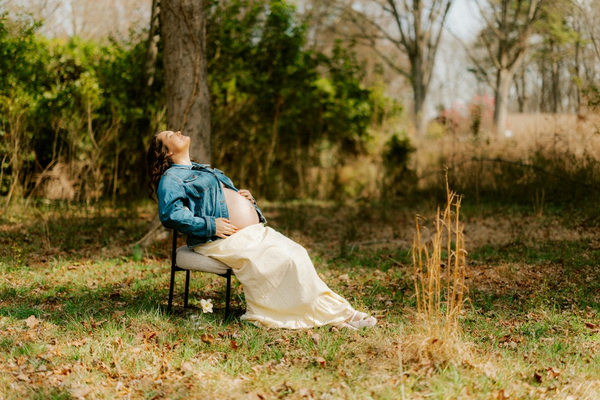
Some days, even a short seated session at home is more than you have energy for, and that's a completely legitimate place to be — not a failure to plan around. An AI maternity photo generator like AI Maternity Photoshoot Lab removes the live-shoot part entirely: you upload a single clear photo of yourself, taken whenever you had the energy for it, even weeks ago, and the system restyles it into a polished, maternity-style portrait. There's no standing, no heat exposure, no scheduling around your best hour of the day — the entire process happens after the fact, from wherever you're sitting right now.
This also solves a specific, common timing problem: your best-lit, best-feeling photo and your highest-energy day rarely land on the same afternoon in the third trimester. A live session forces you to have both at once — decent light, decent energy, and decent weather, all on the same booked date. Working from an existing photo separates those requirements entirely. You can use a good photo from a lower-energy day, or generate the portrait itself on a day when you have ten minutes to sit at your phone but nothing more.
Worth knowing, honestly:
- Results depend on your source photo's lighting and clarity — a sharp, well-lit shot works better than a dim or blurry one, so it's worth using the best existing photo you have rather than a rushed new one
- It works from a single portrait of one person, so it can't merge in a separate photo of a partner if you want a "together" image
- Like any AI-generated image, small artifacts around hands or fabric are occasionally possible — trying more than one source photo helps if the first result isn't quite right
- New accounts get 30 complimentary credits, and photos that don't meet the basic requirements are auto-blocked before any credits are used, so there's no cost to simply trying it when you have the energy to upload one photo and nothing more
A note on summer heat specifically
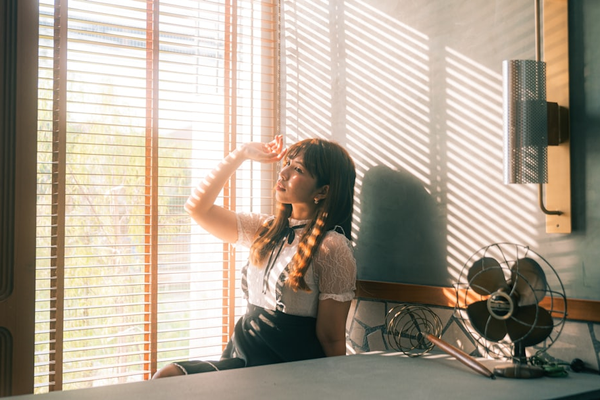
If your due date lines up with the hottest months where you live, the discomfort isn't just in your imagination or a matter of low tolerance — pregnancy genuinely runs warmer, and summer heat compounds a physiological reality that's already there regardless of the season. Scheduling around early morning or evening, staying in shade or air conditioning, and shortening any live session are all reasonable accommodations, not signs that you're being difficult about something other people seem to manage fine. Plenty of people find that skipping the live outdoor session entirely during peak summer heat, in favor of an indoor or after-the-fact option, is simply the more comfortable choice for that particular month of pregnancy.
It's also worth reconsidering the wardrobe assumptions that come with a lot of maternity photoshoot inspiration. Flowing, floor-length gowns look beautiful in photos, but they're also heavier and warmer than they need to be for a summer session — a lighter, shorter, breathable fabric photographs just as well and is a genuinely more comfortable choice when the actual temperature outside is working against you. There's no rule that a maternity photo has to involve a heavy dress simply because that's the dominant style shown in most photography portfolios.
Frequently asked questions
Q. I'm too tired for a maternity photoshoot — is that normal? A. Very. Research on pregnancy fatigue found that 94.2% of pregnant women experience fatigue, with the third trimester typically the most tiring of the three. Feeling too exhausted for a full session is a common, real experience, not something unusual about you.
Q. Is it normal to feel too uncomfortable for photos in the third trimester? A. Yes. Increased blood flow to the skin and metabolic changes both make pregnancy physically warmer and more taxing, especially later on — discomfort at this stage reflects real physiology, not low tolerance.
Q. How do I handle a maternity photoshoot in summer heat? A. Schedule for early morning or evening rather than midday, choose a shaded location over direct sun, keep the session short with built-in breaks, and consider an indoor or after-the-fact option like an AI-generated portrait if outdoor heat exposure isn't appealing at all.
Q. Should I still do a maternity photoshoot if I feel too exhausted to enjoy it? A. Not necessarily as originally planned. If a full session sounds draining rather than enjoyable, scaling down to a shorter format, a seated session, or an AI-generated portrait from an existing photo lets you still end up with something without forcing yourself through an experience you won't actually enjoy.
Q. What if my maternity session already left me feeling worse, not better? A. That points to the format, not to you. A shorter, cooler, more seated version of the same idea often produces a completely different experience — the issue was very likely the pacing and conditions, not an inability to handle a photoshoot at all.