If the thought of standing in front of a photographer, being told where to put your hands, and holding a smile for twenty minutes sounds closer to a chore than a memory you'll treasure, you don't have to do it that way. Camera shyness around maternity photos is genuinely common, and there's a real option that skips live posing entirely: using an everyday photo you already have, taken in your own space, with nobody directing you at all. Below: why posing feels awkward in the first place, practical fixes if you do want a live session, and how to get maternity-style photos without one.
Key takeaways
- Feeling camera shy is extremely common — a global Dove survey found 77% of women describe themselves this way (PR Newswire)
- "Awkward" photos are usually a posing problem, not a you problem — specific technique fixes exist for exactly this
- Introverts in particular can skip the hour of small talk and direction entirely by using a photo taken privately instead of a live session
- An AI maternity photo generator works from a normal photo you already have — no studio, no photographer, no performing comfort you don't feel
Why posing feels so awkward in the first place
If you've never modeled or acted, being told to "just relax" in front of a camera is oddly one of the hardest instructions to follow — awareness of being watched is exactly what makes relaxing difficult. A 2013 global Dove survey found that 77% of women describe themselves as camera shy, and 57% said they actively worry about how they'll look in photos in a way that affects their confidence (PR Newswire). None of that is unique to pregnancy — it's just that maternity photos tend to ask for more direct posing (specific hand placement, holding still, facing a certain way) than a typical candid snapshot, which makes the underlying discomfort more obvious.
Photographers themselves acknowledge this is a real, common problem rather than something only certain people struggle with. The standard photography-industry fix is what's sometimes called a "staged candid" — giving you something to actually do with your body instead of asking you to hold a static pose, since tension in a held position reads clearly on camera while movement and purpose don't (Creatively Squared).
It's not just you — there's a real reason photos feel "off"
There's a specific, well-studied reason photos of yourself can feel wrong in a way that's separate from posing entirely. You see your own face in the mirror dozens of times a day, and a mirror shows a reversed image — flipped left to right compared to how everyone else actually sees you. A classic 1977 study by Mita and colleagues found that people consistently prefer photographs showing their mirror-image (flipped) face, while their friends prefer the true, non-flipped version of the same photo (Psychology Today). This is an example of the mere-exposure effect — we tend to prefer whatever version of a stimulus we're most familiar with, and for your own face, that's the mirrored one, not the one a camera actually captures.
In other words: a normal, non-flipped photo can look subtly "wrong" to you even when it looks completely normal to everyone else, simply because it isn't the version of your face you're used to seeing. That mismatch is a documented phenomenon, not a sign that the photo turned out badly or that you're unusually hard to photograph.
Tips that actually reduce awkwardness in a live session
If you're planning to work with a photographer, a handful of specific techniques consistently help people who feel stiff or self-conscious in front of a camera:
- Walk instead of standing still. Strolling toward or past the camera creates natural movement and a relaxed expression that a static pose rarely produces (Creatively Squared).
- Give your hands a job. Hold a flower, a mug, a partner's hand, or the hem of your sleeve — hands with no task tend to end up looking stiff or overly deliberate.
- Sit or lean rather than stand square to the camera. Leaning against a doorframe or wall, or sitting on steps, immediately softens a pose compared to standing straight-on.
- Ask for specific direction, not "look natural." "Look natural" is nearly impossible to act on; "turn your shoulders slightly and drop your chin" is a concrete instruction you can actually follow, and a good photographer will default to specifics once you ask.
- Interact with your environment or another person. Touching a wall, adjusting a plant, or looking at a partner instead of the lens takes the pressure off performing directly for the camera.
- Wear something you already feel like yourself in. Clothing bought specifically "for the photos" can add its own layer of self-consciousness — familiar, comfortable clothing tends to photograph more naturally simply because you're not thinking about it.
- Ask to see a shot partway through. Checking one or two images on the photographer's screen partway through a session can genuinely ease anxiety — seeing that it's going fine often relaxes people more than any posing instruction does.
The specific reason introverts find this exhausting
For introverts, the hard part of a maternity session usually isn't any single pose — it's the sustained social performance of it. An hour with a photographer typically means small talk while they set up equipment, being watched and directed continuously, and putting on an outward expression of ease for someone you likely just met, all while managing your own physical discomfort in later pregnancy. That's a specific kind of draining that has nothing to do with how photogenic you are, and it doesn't go away just because the photographer is friendly or the results turn out nice.
If that sustained-performance part is the actual problem, the fix isn't a better pose — it's removing the live audience altogether.
A middle ground: solo self-timer sessions
If skipping a camera entirely feels like too big a jump but a live photographer feels like too much, a solo self-timer session sits in between. Set a phone on a tripod or a stack of books, use a 2–3 second self-timer or a cheap Bluetooth remote, and take photos alone in your own space with nobody watching or directing you in real time. You still get to move, adjust, and try again exactly as many times as you want, but without an audience reacting to each attempt. The main trade-off is that you're managing both sides of the camera yourself, which takes more trial and error than being directed — but for a lot of people, that trade is worth it specifically to remove the "being watched" part of the discomfort.
How to actually do this with a photo you already have
If a live session — solo or with a photographer — still doesn't appeal, here's the practical path using an existing photo:
- Find a clear photo of yourself from any point in your pregnancy. It doesn't need to have been taken for this purpose — a photo from a family dinner, a work event, or just a phone photo a partner took works fine.
- Check that your face is visible and well-lit. A front-facing or near-front-facing shot with decent lighting gives the cleanest result; heavy shadows or an extreme angle make it harder for the system to work with.
- Upload it and let the system generate a result. Since non-compliant photos are auto-blocked before any credits are used, there's no cost to trying a photo that turns out not to work.
- Try a second or third photo if you're not happy with the first result. Different source photos produce different results, and there's no penalty for testing more than one.
- Decide privately whether you like it before showing anyone. Nobody else needs to see an attempt you weren't happy with — the whole process happens without an audience at any stage.
Skip the posing: using a photo you already have
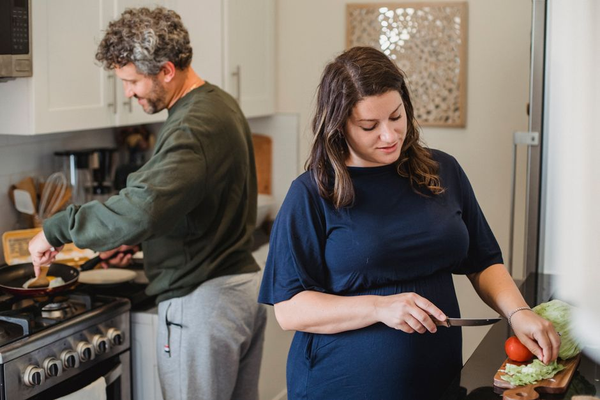
A tool like AI Maternity Photoshoot Lab works from a single photo you upload instead of a live session, and that one difference changes the whole experience if you're camera shy. There's no photographer watching you in real time, no small talk to sustain, no sense of being observed while you try to "look natural." You pick the photo yourself, privately, on your own schedule — it can be a deliberately taken portrait, or genuinely just an everyday photo someone snapped of you cooking dinner or sitting on the porch. The system needs a clear, front-facing shot with decent lighting; it doesn't need you to have been posing for a maternity photo at all when the picture was taken.
Worth knowing, honestly:
- Photos that don't meet the basic requirements get auto-blocked before any credits are used, so trying it costs nothing if your first attempt doesn't work
- Results depend on your source photo — a sharp, well-lit shot with your face clearly visible produces a cleaner result than a dark or blurry one
- It works from one portrait of one person, so it can't merge a separate photo of a partner into the same generated image as if you were photographed together
- Like any AI-generated image, results can occasionally show a small artifact around hands or fabric — worth trying more than one source photo if the first attempt isn't quite right
- New accounts start with 30 complimentary credits, so you can see an actual result before deciding whether it's worth continuing
If a past photo shoot already felt awkward, that photo doesn't have to be the end result
If you've already sat through a maternity session that felt stiff and uncomfortable, and the resulting photos show exactly that discomfort on your face, you're not stuck with them as your only option. Rather than booking a second live session — which comes with the same anxiety as the first — you can pick a different, more relaxed photo of yourself from any point in your pregnancy and generate a new maternity-style portrait from that instead. A casual photo where you happened to look at ease often produces a result you'll like more than a technically well-lit but visibly tense one from a formal session.
Comparing your options by how camera shy you actually are
How you feel vs. what might work
Match your comfort level to the right approach.
A little self-conscious, otherwise fine with a session
- Staged-candid techniques with a patient photographer
- Live posing required, but softened
Genuinely dread being directed and watched
- DIY self-portrait at home with a timer, no audience
- Minimal live posing — just you
Introverted, find the small talk and performance draining
- AI-generated portrait from an existing photo
- No live posing required
Have zero interest in ever standing in front of a camera for this
- AI-generated portrait from a casual, already-existing photo
- No live posing required
The actual question worth asking yourself
Before deciding how to approach this, it's worth being specific about what kind of camera shy you actually are, because the fix is different depending on the answer. Is it that you don't know what to do with your hands and feel stiff the moment someone says "smile"? That's a posing problem, and the staged-candid techniques above genuinely help. Is it that you don't like how your own face looks in photos generally, even candid ones? That's closer to the mirror-image effect, and it's worth knowing that feeling is close to universal rather than specific to you. Or is it that the idea of being watched and directed by someone you don't know for an hour sounds draining regardless of how the photos turn out? That's a "stranger in the room" problem, and it's the one a private, photo-based option solves directly rather than working around.
Frequently asked questions
Q. I'm camera shy — can I still get maternity photos? A. Yes. Camera shyness is extremely common (a global Dove survey put it at 77% of women), and it doesn't have to mean skipping maternity photos altogether — an AI-generated portrait from a photo you already have removes the live-camera part of the experience entirely.
Q. What are some tips for not looking awkward in maternity photos? A. Give your hands something to hold, walk or lean instead of standing rigidly, ask your photographer for specific directions rather than "look natural," and interact with your surroundings or a partner instead of staring straight at the lens.
Q. Are there maternity photo options specifically for introverts? A. Yes. The most direct one is skipping the live session altogether — generating a maternity-style portrait from a photo you already have avoids the sustained small talk and being-watched feeling that tends to be the actual draining part for introverts, not the posing itself.
Q. Do I need a professional photo shoot to get good maternity photos? A. No. A clear, well-lit everyday photo — even one taken casually at home — can be turned into a styled maternity-style portrait without ever booking a live session or standing in front of a photographer.
Q. Why do I look so awkward in every photo, even ones I didn't pose for? A. Part of this is simply that photos show your true, non-reversed face, while you're used to seeing yourself flipped in a mirror — a documented psychological effect that makes ordinary photos of yourself feel subtly unfamiliar to you even when they look completely normal to everyone else.
Q. My last maternity photos came out looking stiff and uncomfortable — can I fix that without another session? A. Yes. Rather than repeating a live session that carries the same anxiety as the first one, you can generate a new maternity-style portrait from a different, more relaxed photo of yourself — ideally one where you weren't consciously posing at all.